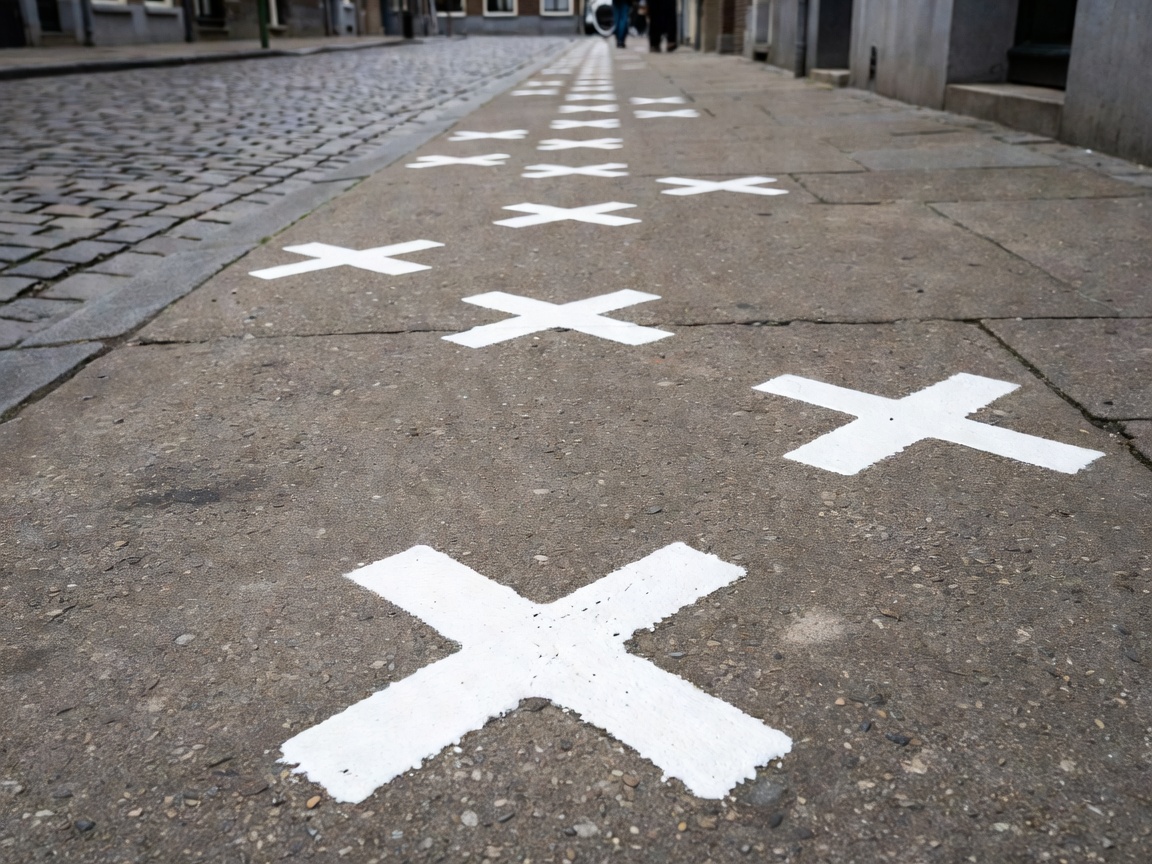
The town of Baarle sits right along the border between Belgium and the Netherlands. However, rather than being neatly bisected by a single straight boundary line, Baarle represents the world's most tangled collection of international enclaves and counter-enclaves.
Feudal Origins of the Border Splinters
The origin of this territorial anomaly dates back to 1198. Duke Henry I of Brabant granted parcels of uncultivated land to Godfried II of Heinsberg, the Lord of Breda. However, Duke Henry retained control of the parcels that were already settled and cultivated. Over centuries of medieval land transfers, treaties, and the eventual independence of Belgium in 1830, these micro-parcels solidified into modern state borders.
The Structure: Enclaves Inside Enclaves
The municipality consists of Baarle-Hertog (Belgian sovereign territory) and Baarle-Nassau (Dutch sovereign territory). In total, there are 22 Belgian exclaves located entirely inside the Netherlands. Within these Belgian exclaves, there are 7 Dutch counter-enclaves—parcels of Dutch land surrounded by Belgian land, which is itself surrounded by Dutch territory.
The "Front Door Rule" & Unique Daily Life
Because the border runs straight through buildings, cafes, houses, and stores, local taxation and nationality laws are governed by the Front Door Rule (voordeurregel). A building's official address and jurisdiction depend on which country its main entrance opens into.
If a border cuts directly through a front door, the house is assigned a dual address with both Belgian and Dutch house numbers. Local businesses must comply with two sets of closing time regulations, liquor laws, and municipal tax codes.